History of LZ 130 Graf Zeppelin II
LZ-130 Graf Zeppelin II was a German rigid airship. It was made in 1938 and flew from then to 1939. It was also second and last airship from “Hindenburg” class and the last of the great German rigid airships built by the “Zeppelin Luftschiffbau” during the period between the World Wars.
Initial design of the LZ-130 Graf Zeppelin II was made to be almost identical to Hindenburg and to use hydrogen in lifting cells. After the Hindenburg disaster Hugo Eckener, manager of the “Zeppelin Luftschiffbau”, didn’t want to use hydrogen alone in a passenger airship and risk disaster again so he decided to use helium on Graf Zeppelin II. United States were the only source of helium in large enough quantities at the time so Eckener went to Washington, D.C. to try and get helium for his airship. On a meeting with President, Roosevelt himself promised him that he will get helium but only if it is used for peaceful purposes only. Nazi Germany annexed Austria in March 1938 which led U.S. to refuse to supply helium and the Graf Zeppelin II was redesigned to be filled with hydrogen.
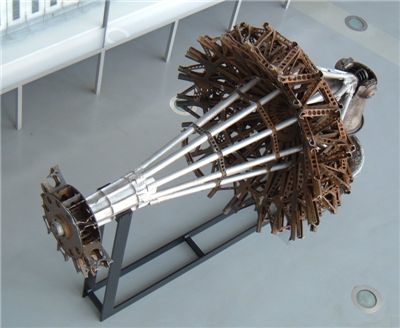
While design of the LZ-130 Graf Zeppelin II was based on Hindenburg, some improvements were made. Pusher engine cars were replaced with diesel engines with tractor propellers. Wooden propellers of the Hindenburg, which had problems with moisture absorption causing imbalance, were replaced with three-bladed propellers were made of plastic wood. Because the fuel's weight lost during flight caused problems with navigation, engines were made to have water recovery system which captured the exhaust of the engines and recovered water vapor from the exhaust gases, condensed them and led them into tanks aboard the airship. Passenger decks were made because they still expected to get helium and were constructed to accommodate 40 people. Cabins were larger than on Hindenburg. Construction began in 1936 end ended in 1938. It was obvious that the ship would never serve as a passenger liner manly because of the lack of a supply of helium. It was given the permit by the Reich Air Ministry to fly for one year until 1 September 1939.
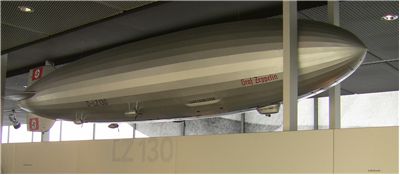
The first flight of the LZ-130 Graf Zeppelin II was on 14 September 1938 with 74 people on board, mainly Air Ministry and Zeppelin Company officials along with builders, technicians and engineers of the airship. Flight listed 5 hours and 40 minutes and was long 925 kilometers. Graf Zeppelin II had 30 flights in total. While the first few flights were test flights, Graf Zeppelin II flew propaganda flights for the Third Reich and the National Socialist Party as well as espionage trip. Longest trip that it ever made was from 2 to 4 August 1939, taking over 48 hours and covering 4,203 km. Its mission was to secretly collect information on the British Chain Home radar system.
The last trip of the LZ-130 Graf Zeppelin II was on 20 August 1939. It took off from Frankfurt am Main with an intermediate stop at Essen/Mülheim Airport, finishing the era of the of large airship transport. In April 1940, Hermann Göring gave the order to dismantle both Graf Zeppelins and the unfinished framework of LZ-131, which was in the production at the time. Their material was used for the construction of war planes.